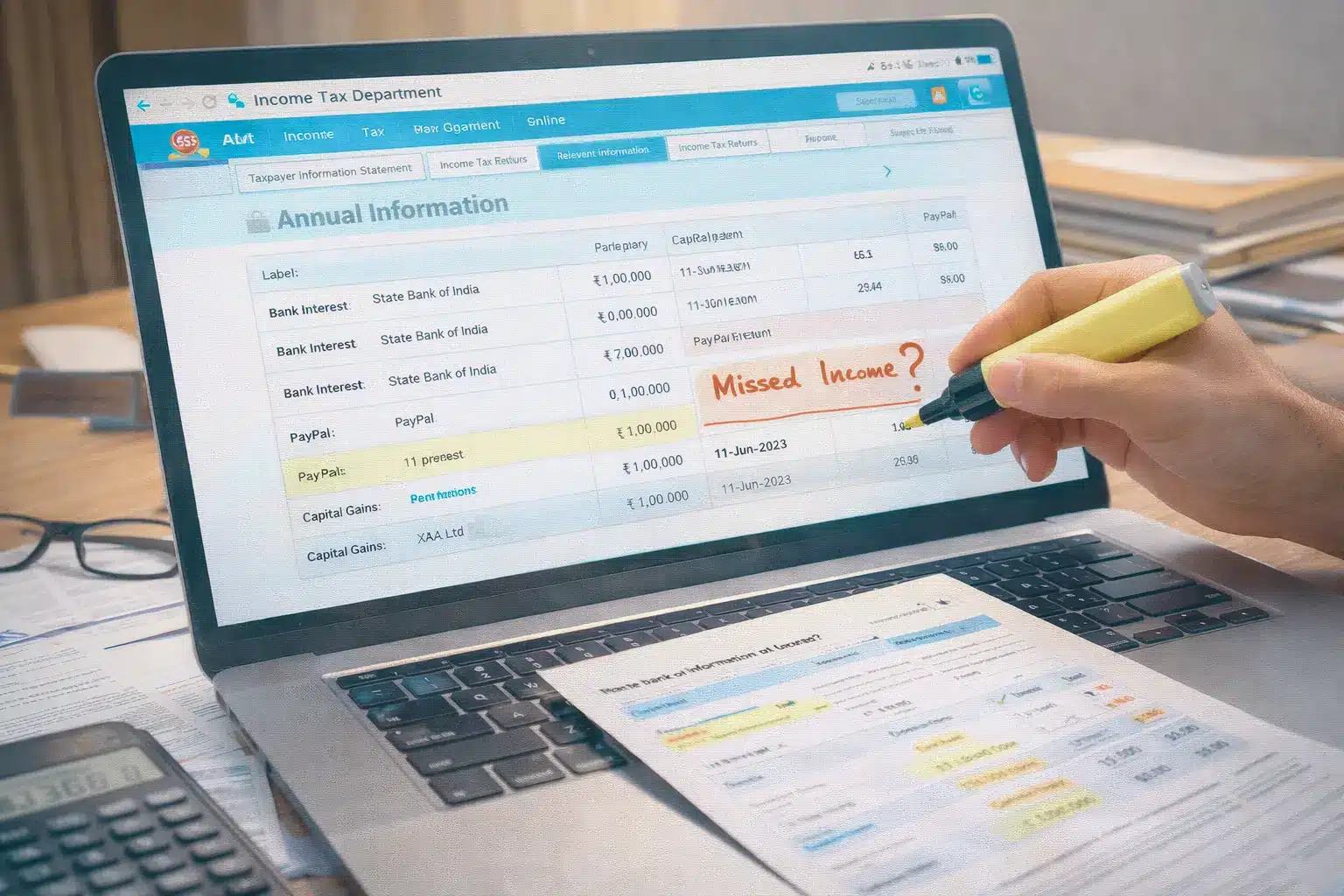
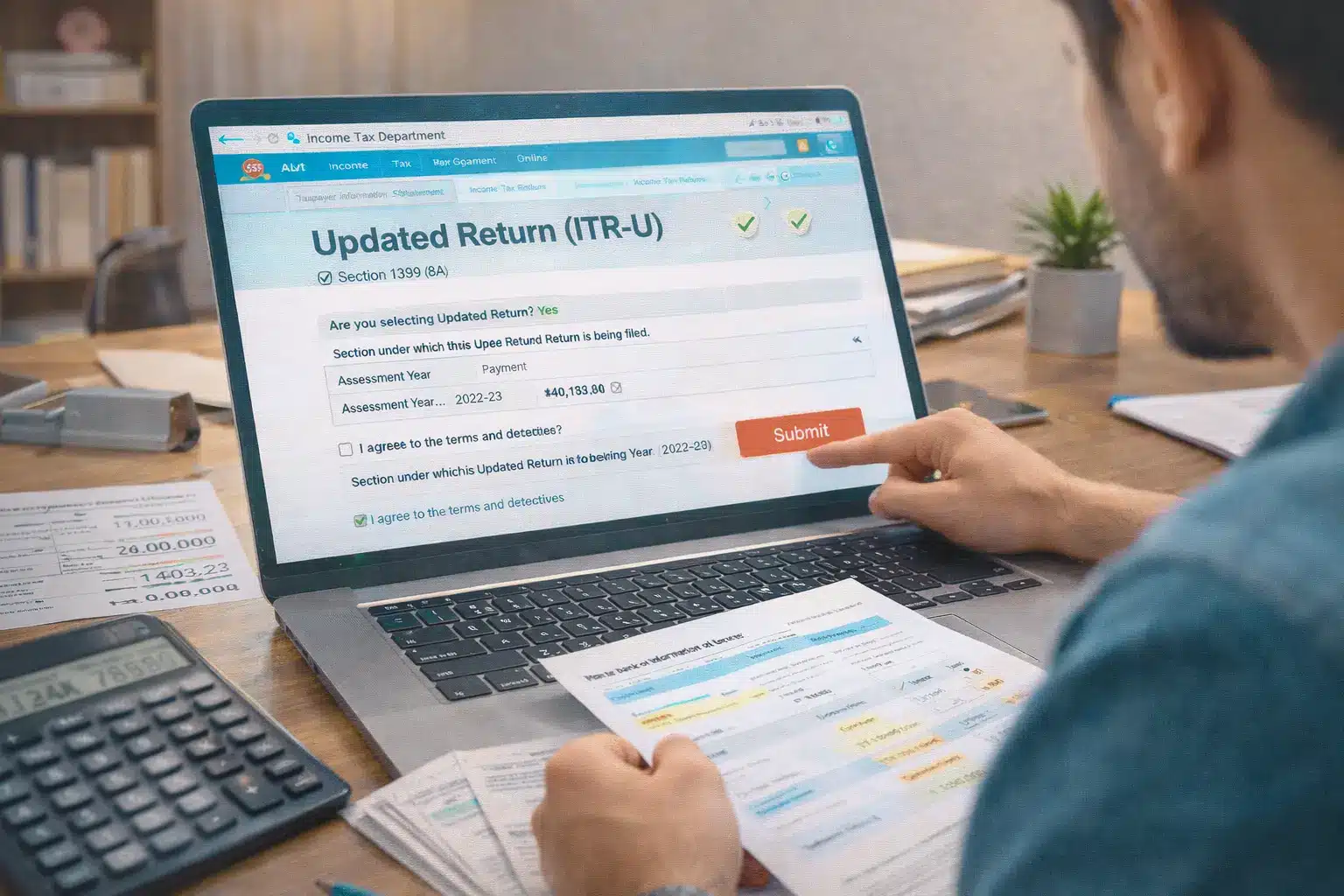
Mistakes in tax returns are more common than most taxpayers realize.
Missed bank interest, forgotten capital gains, incorrect deductions, or unreported foreign income can easily lead to compliance risks. Recognizing this reality, the Indian government introduced Section 139(8A) through the Finance Act 2022, allowing taxpayers to correct past errors using an Updated Return (ITR-U).
This Updated Return under Section 139(8A): Complete ITR-U Filing Guide (India 2026) explains how individuals, professionals, startups, and MSMEs can voluntarily disclose missed income and correct errors, even years after the original filing deadline.
In this comprehensive guide by AVC India, we explain:
What an Updated Return under Section 139(8A) is
Who can file ITR-U and when
Additional tax under Section 140B
Real-world examples for freelancers, startups, and MSMEs
Step-by-step ITR-U filing process
Compliance strategy to avoid income tax notices
What Is an Updated Return (ITR-U)?
An Updated Return is a special tax return filed under Section 139(8A) of the Income Tax Act, 1961 that allows taxpayers to correct previously filed returns or declare missed income.
Unlike revised returns, updated returns are designed primarily for voluntary disclosure of under-reported income.
The objective is simple:
Encourage voluntary compliance while reducing litigation and tax disputes.
The government introduced this mechanism as part of its “trust-based tax governance” approach.
Difference Between Revised Return and Updated Return
Feature
Revised Return
Updated Return
Purpose
Correct mistakes
Declare missed income
Filing deadline
31 December of the assessment year
Up to 48 months after AY
Additional tax
No additional tax
25%–70% additional tax
Refund
Can increase the refund
Refund cannot increase
Loss
Can increase loss
Loss can only decrease
Filing frequency
Multiple revisions allowed
Only once
This means ITR-U should only be used for compliance correction, not tax planning.
Who Can File Updated Return (Section 139(8A))?
Under the provisions explained in this Updated Return under Section 139(8A): Complete ITR-U Filing Guide (India 2026), any eligible taxpayer can file an updated return, including:
Individuals
Freelancers and consultants
Startups and founders
Companies and LLPs
MSMEs and partnership firms
NRIs with Indian income
Updated returns can be filed whether or not an original return was filed, making it a flexible compliance option for correcting past omissions.
Situations Where ITR-U Is Useful
Updated return filing is commonly used when taxpayers discover:
Missed Income
Examples include:
Bank interest income
Dividend income
Freelance payments not reported
Capital gains from shares or crypto
Incorrect Tax Calculation
Errors in:
Slab calculation
Advance tax estimation
Foreign tax credit claims
Incorrect Deductions
Sometimes deductions are wrongly claimed under:
Section 80C
Section 80D
Section 80G
Wrong Tax Regime Selection
Taxpayers who mistakenly chose the wrong regime may need corrections.
Situations Where an Updated Return Cannot Be Filed
As explained in this Updated Return under Section 139(8A): Complete ITR-U Filing Guide (India 2026), the law places clear restrictions on when an updated return can be filed.
An Updated Return (ITR-U) cannot be filed in the following cases:
It reduces tax liability
It increases the refund amount
It increases the loss amount
Search or seizure proceedings have started
Assessment proceedings are ongoing
Prosecution has begun under the Income Tax Act
The ITR-U mechanism exists strictly for additional disclosure of income, ensuring voluntary compliance rather than reducing existing tax obligations.
Time Limit to File Updated Return
Following the Finance Act amendments, taxpayers can file updated returns up to 48 months from the end of the relevant assessment year.
Example
Financial Year
Assessment Year
Last Date for Updated Return
FY 2022-23
AY 2023-24
31 March 2028
FY 2023-24
AY 2024-25
31 March 2029
This extended window provides taxpayers ample time to correct mistakes discovered later.
Additional Tax under Section 140B
As highlighted in this Updated Return under Section 139(8A): Complete ITR-U Filing Guide (India 2026), filing an updated return comes with an additional tax cost.
The government charges a compliance premium depending on how late the correction is made, ensuring that delayed disclosures under ITR-U are appropriately penalized.
Time after Assessment Year
Additional Tax
Up to 12 months
25% additional tax
12–24 months
50% additional tax
24–36 months
60% additional tax
36–48 months
70% additional tax
This additional tax applies to:
Tax payable
Interest under sections 234A, 234B, and 234C
Late filing fees
The longer a taxpayer waits, the higher the penalty.
Step-by-Step Process to File Updated Return (ITR-U)
Step-by-Step Process to File ITR-U (Updated Return)
As explained in this Updated Return under Section 139(8A): Complete ITR-U Filing Guide (India 2026), here is the practical process followed by tax professionals:
Step 1: Review AIS and Form 26AS
Analyze the Annual Information Statement (AIS) and Taxpayer Information Summary (TIS) to identify mismatches in reported income.
Step 2: Identify Missing Income
Reconcile all financial records, including:
Bank statements
Capital gains statements
Business income records
Foreign assets or income
Step 3: Choose the Correct ITR Form
Select the same ITR form used previously (ITR-1, ITR-2, ITR-3, etc.).
Step 4: Select Filing Type
Choose “Updated Return under Section 139(8A)” on the Income Tax portal.
Step 5: Pay Additional Tax
Before filing, the applicable tax must be paid using Challan ITNS 280.
Step 6: Upload ITR-U
Submit the updated return through the Income Tax e-Filing Portal.
Step 7: Verify the Return
Verification can be completed using:
Aadhaar OTP
Net banking EVC
Digital Signature Certificate (for companies)
The return must be verified within 30 days of submission.
Real-World Scenarios
As explained in this Updated Return under Section 139(8A): Complete ITR-U Filing Guide (India 2026), here are practical scenarios where filing an updated return can help avoid compliance risks:
Freelancer Case
A freelance designer forgot to report ₹3 lakh received via PayPal.
Using ITR-U allows them to voluntarily disclose the income and reduce the risk of scrutiny notices from the tax department.
Startup Scenario
A startup realised it had overstated losses by ₹10 lakh.
By filing an updated return, the company can correct carried-forward losses, ensuring accurate financial records before raising funding.
Investor Scenario
An investor failed to report cryptocurrency gains.
ITR-U enables timely correction before the Income Tax Department flags the transaction through AIS data, helping avoid penalties and notices.
Risks of Not Filing Updated Return
Consequences of Ignoring Tax Discrepancies
As highlighted in this Updated Return under Section 139(8A): Complete ITR-U Filing Guide (India 2026), ignoring discrepancies in your tax return can lead to serious legal and financial consequences.
Possible outcomes include:
Income tax notices under Section 148
Penalties for under-reporting of income
Prosecution in severe cases
Scrutiny assessments by the tax department
Voluntary correction through ITR-U under Section 139(8A) significantly reduces litigation risk and helps maintain long-term compliance.
Strategic Compliance Advice for Taxpayers
As explained in this Updated Return under Section 139(8A): Complete ITR-U Filing Guide (India 2026), tax professionals generally recommend filing an updated return in the following situations:
AIS data shows an income mismatch
Capital gains were incorrectly reported
Foreign income disclosure is incomplete
Business income reconciliation reveals errors
When You Should Be Careful
However, taxpayers should avoid filing ITR-U without proper professional review because:
Additional tax liability can be substantial
Once filed, an updated return cannot be revised
Incorrect computation may create further financial and legal liabilities
Important Risk: Foreign Assets and the Black Money Act
As discussed in this Updated Return under Section 139(8A): Complete ITR-U Filing Guide (India 2026), a critical issue arises when taxpayers disclose foreign assets through an updated return.
While ITR-U allows the reporting of missed foreign income, the provisions of the Black Money Act, 2015, do not fully recognize updated returns for compliance purposes.
This creates a complex situation where taxpayers must carefully evaluate their compliance strategy before using ITR-U for foreign asset corrections.
In such cases, seeking professional guidance becomes essential to avoid legal complications and ensure proper disclosure.
Frequently Asked Questions
What is ITR-U?
ITR-U is an updated income tax return filed under Section 139(8A) to disclose missed income or correct errors.
How many times can an updated return be filed?
Only once per assessment year.
Can an updated return increase the refund?
No. Refund claims cannot be increased using ITR-U.
Can an updated return reduce loss?
Yes, following recent amendments, losses can be reduced but not increased.
What is the penalty for an updated return?
Additional tax ranges from 25% to 70% depending on the delay.
How AVC India Can Help
As highlighted in this Updated Return under Section 139(8A): Complete ITR-U Filing Guide (India 2026), filing an updated return requires careful tax analysis and accurate computation.
At AVC India, our chartered accountants assist with:
AIS and tax data reconciliation
Capital gains corrections
Freelancer income reporting
Startup tax restructuring
Updated return filing (ITR-U)
If you suspect errors in your past tax returns, timely professional advice can help prevent serious compliance issues and unnecessary penalties.
Contact AVC India for expert assistance with income tax return corrections and ITR-U filing.