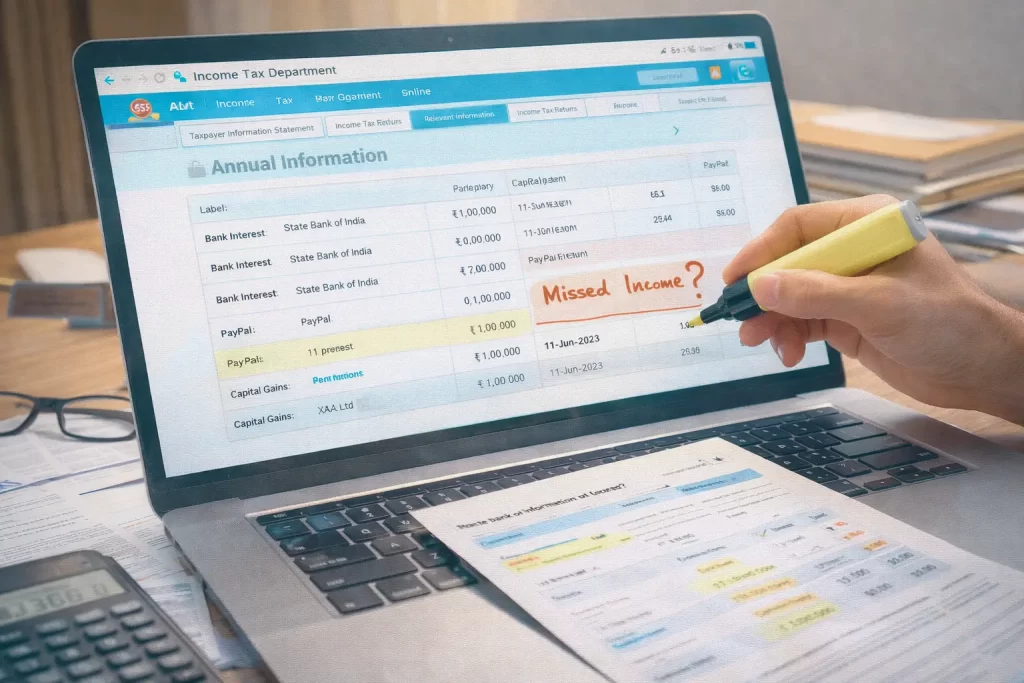
Mistakes in tax returns are more common than most taxpayers realize.
Missed bank interest, forgotten capital gains, incorrect deductions, or unreported foreign income can easily lead to compliance risks. Recognizing this reality, the Indian government introduced Section 139(8A) through the Finance Act 2022, allowing taxpayers to correct past errors using an Updated Return (ITR-U).
This mechanism allows individuals, professionals, startups, and MSMEs to voluntarily disclose missed income and correct errors, even years after the original filing deadline.
In this comprehensive guide by AVC India, we explain:
What an Updated Return under Section 139(8A) is
Who can file ITR-U and when
Additional tax under Section 140B
Real-world examples for freelancers, startups, and MSMEs
Step-by-step ITR-U filing process
Compliance strategy to avoid income tax notices
What Is an Updated Return (ITR-U)?
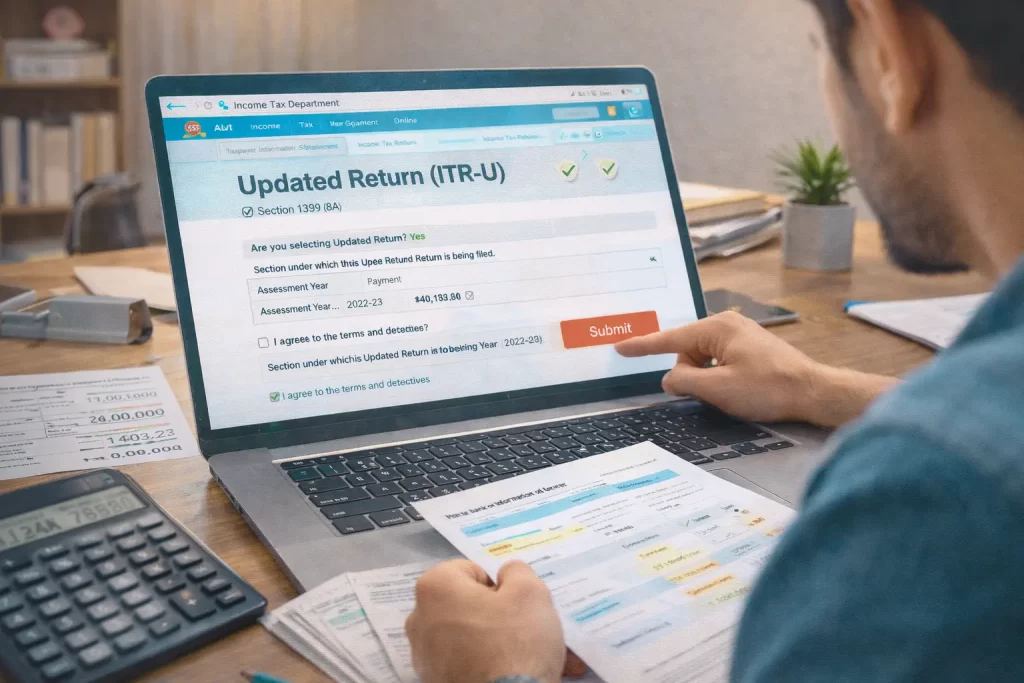
An Updated Return is a special tax return filed under Section 139(8A) of the Income Tax Act, 1961 that allows taxpayers to correct previously filed returns or declare missed income.
Unlike revised returns, updated returns are designed primarily for voluntary disclosure of under-reported income.
The objective is simple:
Encourage voluntary compliance while reducing litigation and tax disputes.
The government introduced this mechanism as part of its “trust-based tax governance” approach.
Difference Between Revised Return and Updated Return
Feature
Revised Return
Updated Return
Purpose
Correct mistakes
Declare missed income
Filing deadline
31 December of the assessment year
Up to 48 months after AY
Additional tax
No additional tax
25%–70% additional tax
Refund
Can increase the refund
Refund cannot increase
Loss
Can increase loss
Loss can only decrease
Filing frequency
Multiple revisions allowed
Only once
This means ITR-U should only be used for compliance correction, not tax planning.
Who Can File Updated Return (Section 139(8A))?
Any taxpayer can file an updated return, including:
Individuals
Freelancers and consultants
Startups and founders
Companies and LLPs
MSMEs and partnership firms
NRIs with Indian income
Updated returns can be filed whether or not an original return was filed.
Situations Where ITR-U Is Useful
Updated return filing is commonly used when taxpayers discover:
Missed Income
Examples include:
Bank interest income
Dividend income
Freelance payments not reported
Capital gains from shares or crypto
Incorrect Tax Calculation
Errors in:
Slab calculation
Advance tax estimation
Foreign tax credit claims
Incorrect Deductions
Sometimes deductions are wrongly claimed under:
Section 80C
Section 80D
Section 80G
Wrong Tax Regime Selection
Taxpayers who mistakenly chose the wrong regime may need corrections.
Situations Where an Updated Return Cannot Be Filed
The law restricts ITR-U in several cases.
An updated return cannot be filed if:
It reduces tax liability
It increases refund amount
It increases loss amount
Search or seizure proceedings have started
Assessment proceedings are ongoing
Prosecution has begun under the Income Tax Act
The mechanism exists strictly for additional disclosure of income.
Time Limit to File Updated Return
Following the Finance Act amendments, taxpayers can file updated returns up to 48 months from the end of the relevant assessment year.
Example
Financial Year
Assessment Year
Last Date for Updated Return
FY 2022-23
AY 2023-24
31 March 2028
FY 2023-24
AY 2024-25
31 March 2029
This extended window provides taxpayers ample time to correct mistakes discovered later.
Additional Tax under Section 140B
Filing an updated return comes with an additional tax cost.
The government charges a compliance premium depending on how late the correction is made.
Time after Assessment Year
Additional Tax
Up to 12 months
25% additional tax
12–24 months
50% additional tax
24–36 months
60% additional tax
36–48 months
70% additional tax
This additional tax applies to:
Tax payable
Interest under sections 234A, 234B, and 234C
Late filing fees
The longer a taxpayer waits, the higher the penalty.
Step-by-Step Process to File Updated Return (ITR-U)
Here is the practical process followed by tax professionals.
Step 1: Review AIS and Form 26AS
Analyze the Annual Information Statement (AIS) and Taxpayer Information Summary (TIS) to identify mismatches.
Step 2: Identify Missing Income
Reconcile:
Bank statements
capital gains statements
business income records
foreign assets or income
Step 3: Choose the Correct ITR Form
Select the same ITR form used previously (ITR-1, ITR-2, ITR-3 etc.).
Step 4: Select Filing Type
Choose “Updated Return under Section 139(8A)” on the income tax portal.
Step 5: Pay Additional Tax
Before filing, tax must be paid using Challan ITNS 280.
Step 6: Upload ITR-U
Submit the updated return through the Income Tax e-filing portal.