Tax saving is no longer just about investing in LIC or PPF.
With the introduction of the new tax regime, updates from Budget 2026, and the upcoming Income Tax Act 2025, the way Indians save tax has fundamentally changed.
Today, this guide is all about the Tax Saving Strategies India 2026. Tax planning is about strategy, timing, and choosing the right structure; not just deductions.
In this guide by AVC India, we break down:
Latest tax-saving rules for FY 2025–26
Old vs New tax regime comparison
Best tax-saving strategies for salaried, freelancers & businesses
Investments that actually save tax
Year-end planning checklist
These are all the Tax Saving Strategies India 2026.
Understanding the New Tax Environment (2026)
India is currently in a transition phase:
Old Income Tax Act, 1961 → transitioning to Income Tax Act, 2025
New Tax Regime → now the default option
Increased focus on digital tracking (AIS, TIS)
👉 This means:
Tax saving is shifting from “investment-based” to “strategy-based planning.”
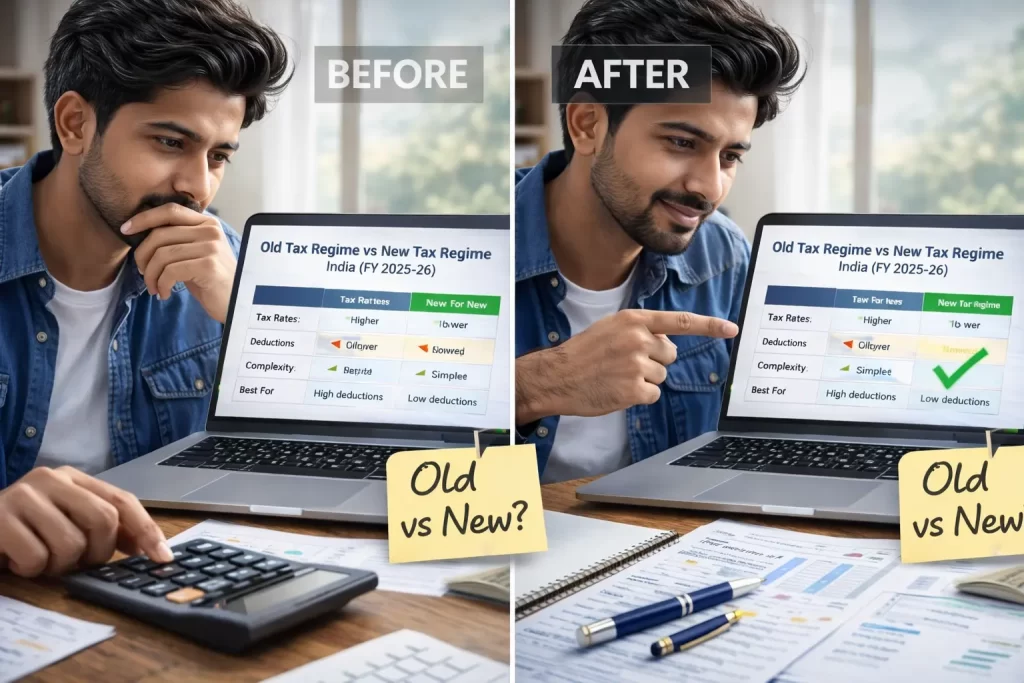
Old vs New Tax Regime: Which Saves More Tax?
This is the most searched tax question in India right now.
Feature
Old Tax Regime
New Tax Regime
Tax rates
Higher
Lower
Deductions
Allowed
Mostly not allowed
Complexity
High
Simple
Best for
High deductions
Low deductions
Key Insight (2026)
Under the new regime:
Income up to ₹12,00,000 → ZERO tax (Section 87A rebate)
With ₹75,000 standard deduction → ₹12.75 lakh tax-free income
This changes everything for salaried individuals.
When to Choose Old Regime
Choose old regime if you have:
High deductions (₹2–4 lakh+)
Home loan interest
Multiple tax-saving investments
When to Choose New Regime
Choose new regime if:
You don’t invest heavily
You want simplicity
You are a freelancer or startup founder
How to Choose the Best Tax Saving Strategies India 2026 Based on Your Income
Choosing the right tax saving strategy is no longer about blindly investing in 80C instruments. In 2026, the best tax saving strategies depend on your income level, financial goals, and the tax regime you choose.
A one-size-fits-all approach does not work anymore.
Below is a practical breakdown to help you select the most effective tax saving strategies India 2026 based on your income bracket.
1. Income Up to ₹12 Lakh (New Regime Advantage Zone)
If your taxable income is within ₹12 lakh:
You may pay zero tax due to Section 87A rebate
With ₹75,000 standard deduction → up to ₹12.75 lakh becomes tax-free
Best Strategy:
Prefer New Tax Regime
Avoid unnecessary investments just for tax saving
Focus on liquidity and wealth building instead of locking funds
Ideal for:
Young professionals
First-job earners
Freelancers with moderate income
2. Income Between ₹12 Lakh – ₹20 Lakh (Decision Zone)
This is the most critical income bracket where choosing the right strategy matters.
You must compare:
Old Regime (with deductions) vs
New Regime (lower tax rates)
Best Strategy:
Choose Old Regime if:
You can claim ₹2–4 lakh deductions (80C, 80D, HRA, home loan)
Choose New Regime if:
You don’t have significant deductions
You prefer simplicity and higher cash flow
Ideal for:
Mid-level salaried employees
Consultants
Growing freelancers
3. Income Above ₹20 Lakh (Optimization Zone)
At higher income levels, tax planning becomes more strategic.
Best Tax Saving Strategies India 2026 for this group:
Salary restructuring (HRA, allowances)
Capital gains planning
Tax-efficient investments
Business expense optimization (for professionals)
In many cases:
Old Regime may still be beneficial if deductions are high
But New Regime works better if deductions are limited
Ideal for:
Senior professionals
High-income freelancers
Business owners
4. Freelancers & Business Owners (Flexible Strategy Zone)
Unlike salaried individuals, freelancers have more control.
Best strategies:
Use presumptive taxation (44AD / 44ADA)
Claim business expenses strategically
Align GST and income reporting
Plan advance tax properly
Decision:
New Regime → better for simplicity
Old Regime → better if deductions are high
Biggest Advantage: Flexibility in structuring income
5. Startups & Founders (Long-Term Strategy Zone)
For founders, tax saving is not just about current savings.
It impacts:
Funding
Valuation
Profitability
Best strategies:
Choose the right business structure
Plan losses and carry-forward properly
Optimize ESOP taxation
Align personal and business tax planning
Key Decision Formula (Simple Rule)
Use this thumb rule:
Low deductions → New Regime
High deductions → Old Regime
High income → Strategic planning required
Common Mistakes to Avoid
Many taxpayers:
❌ Invest ₹1.5 lakh in 80C without checking if it actually saves tax ❌ Ignore new tax regime benefits ❌ Copy others’ strategies
👉Instead:
Choose tax saving strategies based on your actual financial situation, not assumptions.
Top Tax Saving Strategies (FY 2025–26)
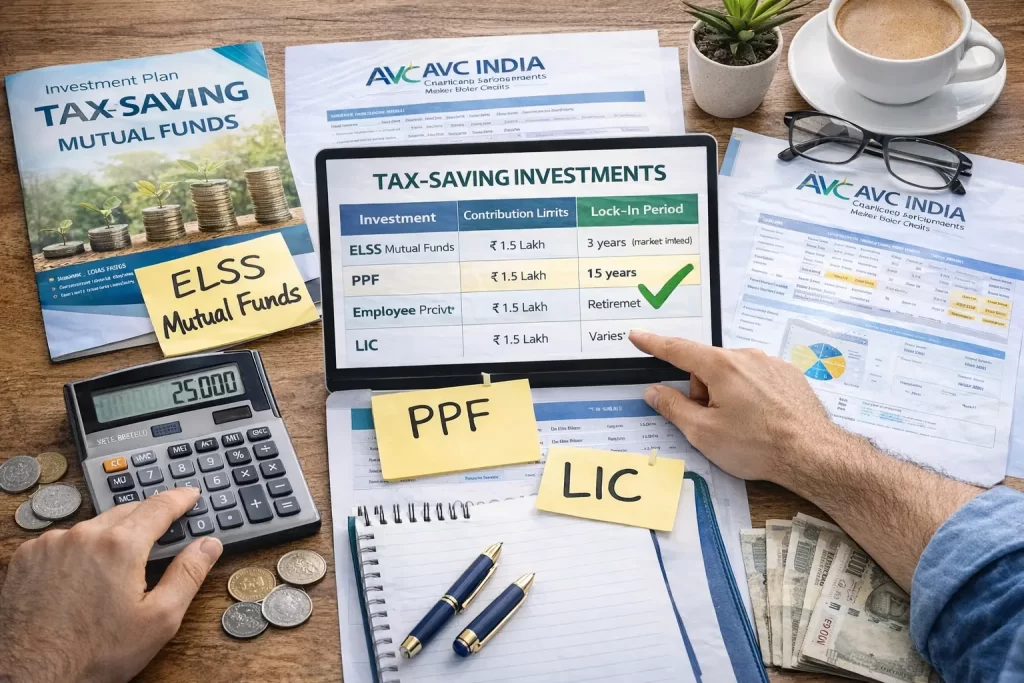
1. Smart Use of Section 80C (₹1.5 Lakh Deduction)
Still one of the most powerful tools under the old regime.
Best Options:
ELSS Mutual Funds
PPF
Life Insurance
EPF
Strategy Tip: ELSS offers both tax saving + market returns, making it superior for long-term wealth.
2. Health Insurance (Section 80D)
You can claim:
₹25,000 (self & family)
₹50,000 (senior citizens)
Not just tax saving, this is risk management + compliance benefit
3. Home Loan Benefits (Section 24 + 80C)
₹2 lakh deduction on interest
Principal under 80C
Best for:
Salaried individuals
Long-term asset builders
4. Salary Structuring for Tax Saving
If you’re salaried, your CTC structure matters.
Tax-saving components:
HRA (House Rent Allowance)
LTA (Leave Travel Allowance)
Food allowance
Fuel reimbursement
This is often ignored but can save ₹50,000–₹1 lakh/year
5. Capital Gains Tax Planning
For investors:
Use long-term holding benefits
Offset losses strategically
Plan asset selling across financial years
Critical for:
Stock traders
Crypto investors
Real estate owners
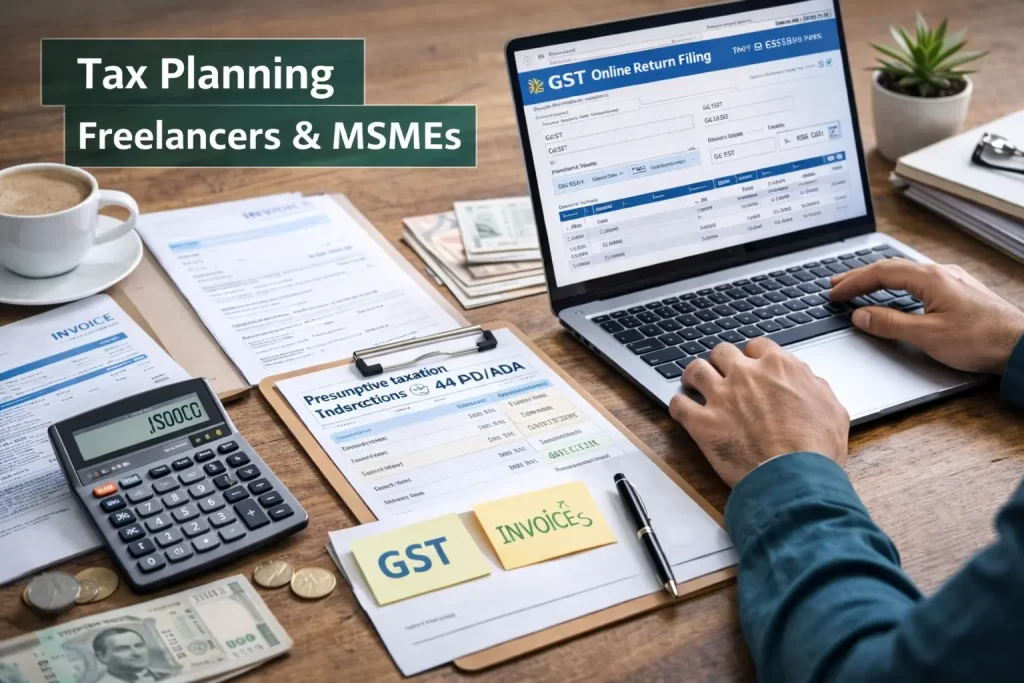
6. Presumptive Taxation (Freelancers & MSMEs)
Under Sections 44AD / 44ADA:
Pay tax on a fixed % income
No need for detailed bookkeeping
Ideal for:
Freelancers
Consultants
Small business owners
Tax Saving Strategies India 2026 for Salaried, Freelancers & Businesses
Salaried Individuals
Best approach:
Compare regimes every year
Optimize salary structure
Use 80C + 80D fully
Maximize standard deduction
Freelancers & Consultants
Focus on:
Presumptive taxation
Expense tracking
GST + income alignment
Biggest mistake: Not planning advance tax → leads to penalties
Startups & Founders
Strategy:
Choose the correct entity (Pvt Ltd vs LLP)
Optimize losses & carry forward
Plan ESOP taxation
Tax planning directly impacts funding & valuation
MSMEs
Focus on:
GST + income tax alignment
Compliance before savings
Cash flow vs tax balance
Budget 2026: Key Tax Saving Changes
No major slab changes
MAT reduced (for companies)
Focus on compliance, not incentives
Foreign asset disclosure scheme introduced
Government focus: Transparency > loopholes
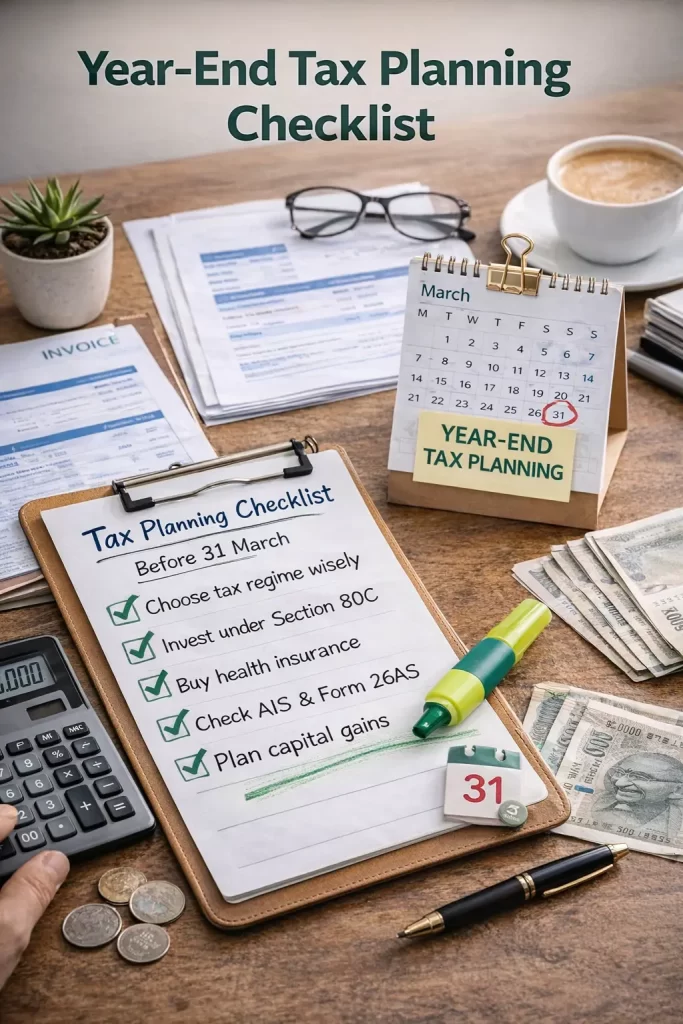
Year-End Tax Planning Checklist (Before 31 March)
Choose tax regime wisely
Invest under Section 80C
Buy health insurance
Check AIS & Form 26AS
Plan capital gains
Pay advance tax
Common Tax Saving Mistakes
Investing only to save tax
Ignoring the new tax regime
Not tracking AIS mismatches
Filing a return without planning
Missing advance tax
FAQs on Tax Saving Strategies India 2026
How can I save tax in India legally?
By using deductions (80C, 80D), choosing the right tax regime, and planning investments strategically.
Which tax regime is better in 2026?
The new regime is better for most taxpayers with fewer deductions, while the old regime benefits those with high investments.
What is the best tax saving investment?
ELSS mutual funds are considered one of the best options due to tax benefits and high return potential.
Can freelancers save tax?
Yes, through presumptive taxation, expense deductions, and proper tax planning.