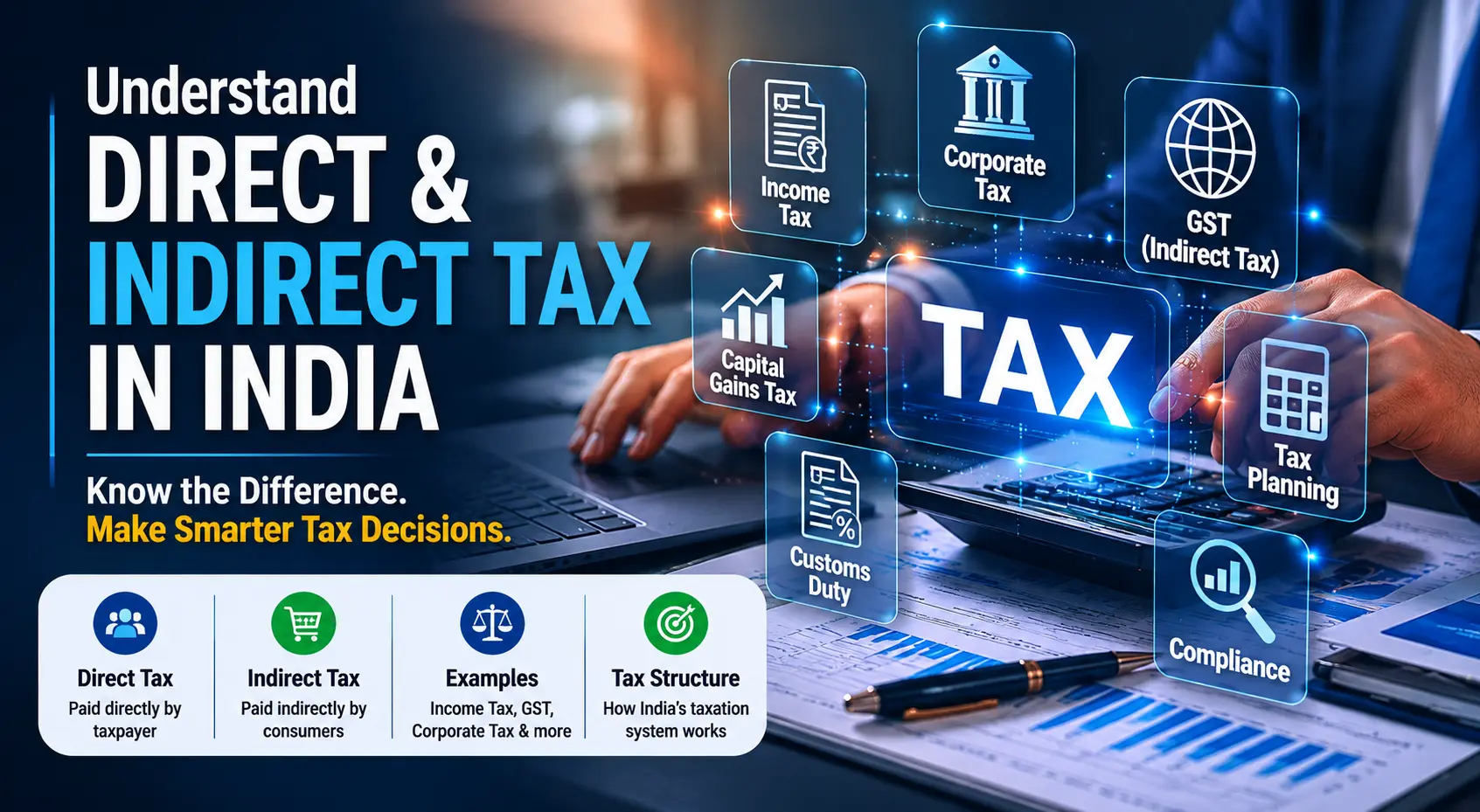
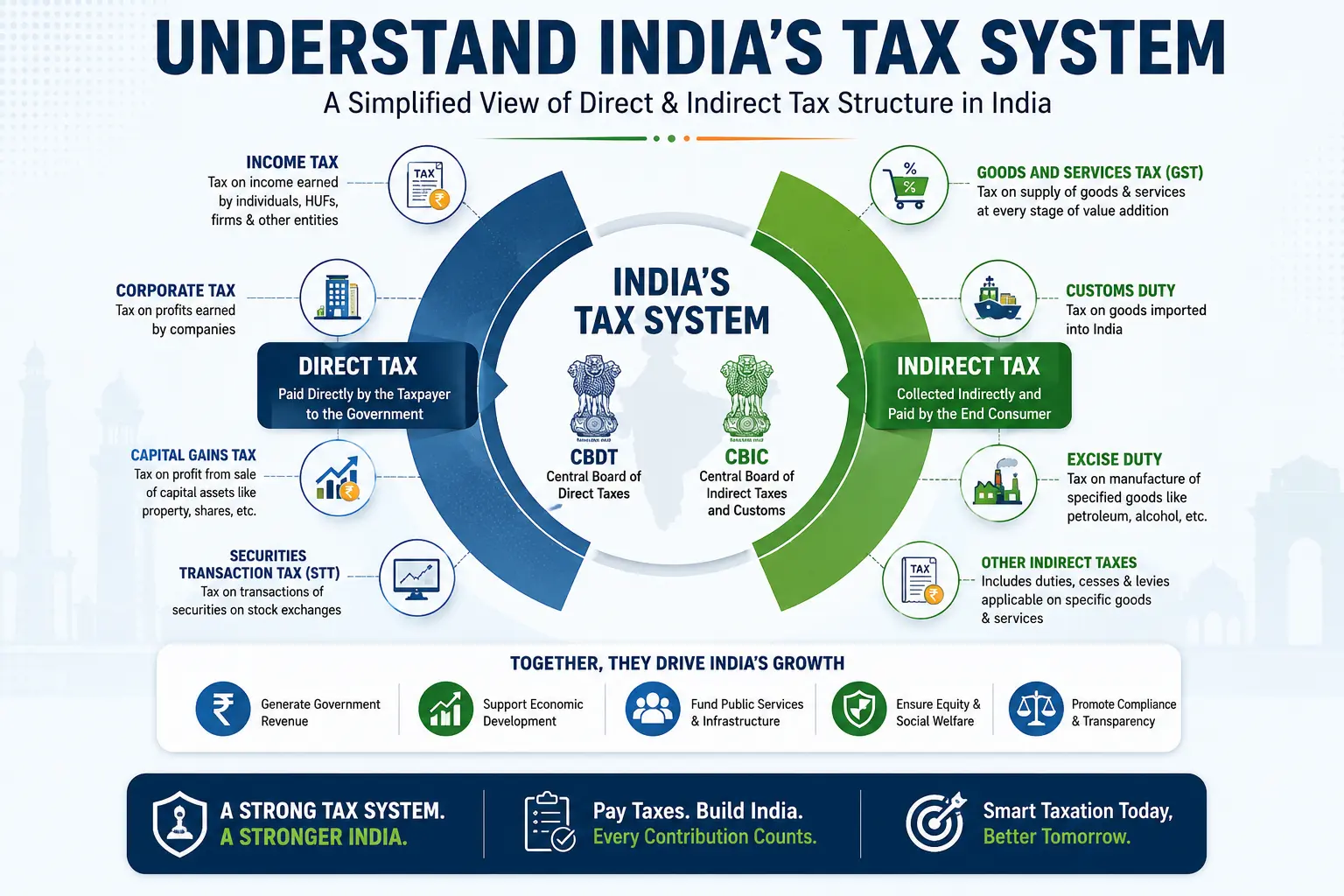
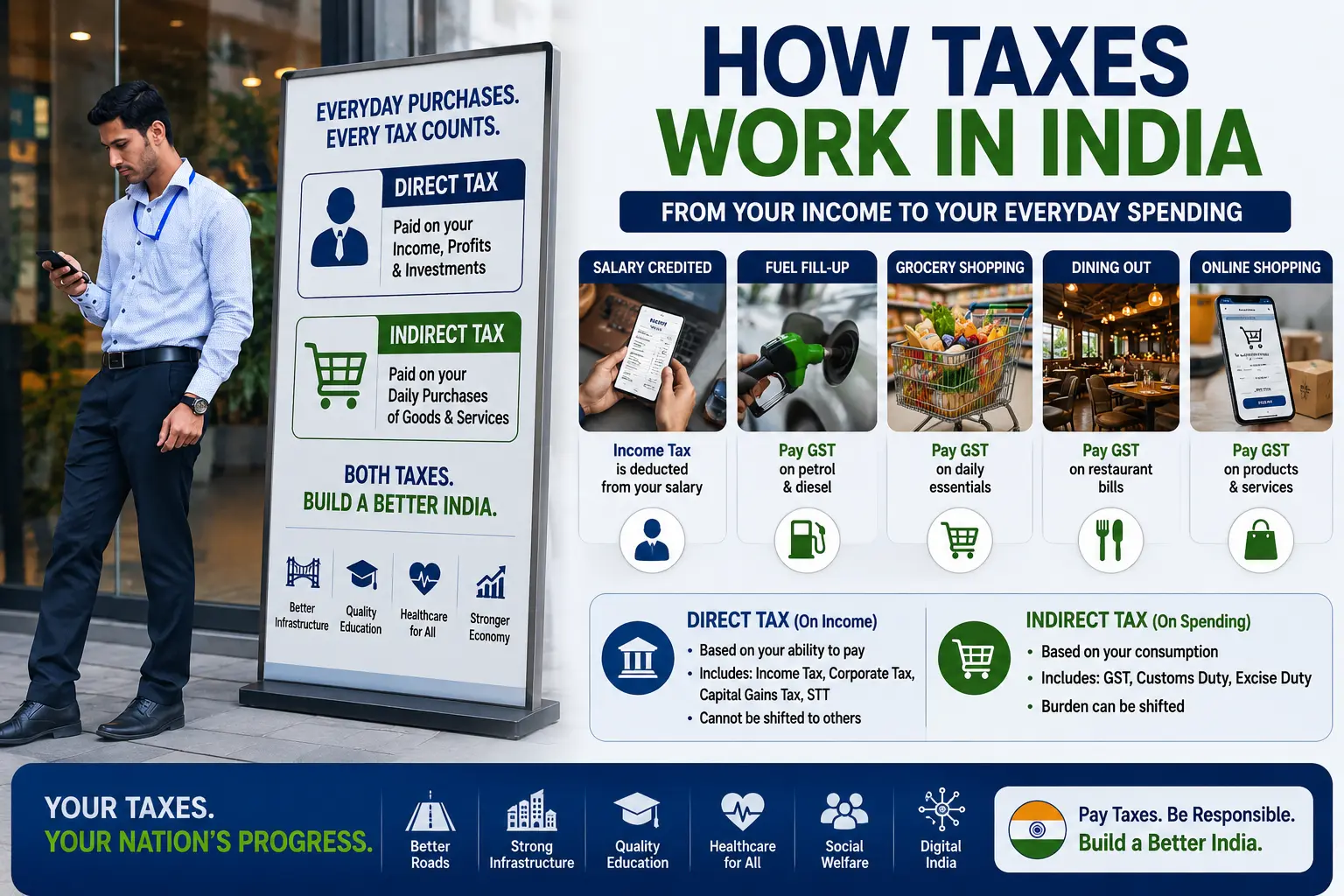
India’s taxation system is broadly divided into two major categories: direct tax and indirect tax. Whether you are a salaried employee, business owner, freelancer, or investor, understanding the difference between direct and indirect taxation is important because both directly affect income, spending, compliance, and financial planning. Over the years, India’s tax structure has evolved significantly. The introduction of GST transformed indirect taxation, while reforms under the Income Tax Act, 1961 and the new tax regime reshaped direct taxation for individuals and businesses. Today, taxes are not only a source of government revenue but also a major tool for economic development, digital compliance, and financial regulation. With AI-based monitoring systems and increasing digital reporting, taxpayers now need a better understanding of how direct and indirect taxes work in India. This guide explains direct and indirect tax in simple language, their differences, examples, advantages, disadvantages, and the role they play in the Indian economy.
What Is Direct Tax?
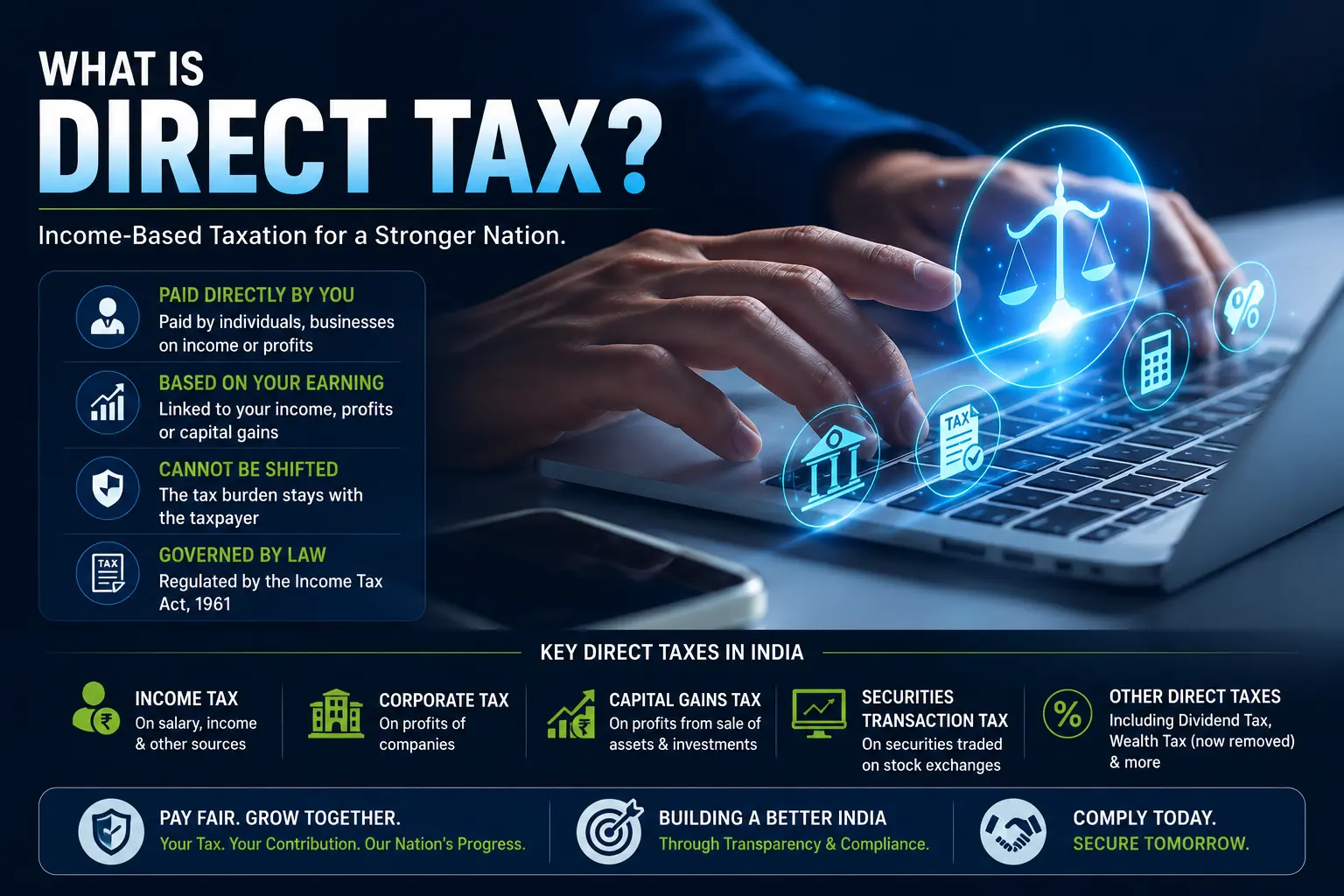
A direct tax is a tax that is paid directly by the taxpayer to the government. The burden of the tax cannot be transferred to another person. In simple words, the person who earns the income or owns the asset is responsible for paying the tax directly to the government authorities. The Income Tax Act, 1961 governs most direct taxes in India. Direct taxes are mainly collected by the Central Board of Direct Taxes (CBDT).
Some of the most common examples of direct taxes include:
*Income Tax
*Corporate Tax
*Capital Gains Tax
*Securities Transaction Tax
Direct taxes are generally linked to the income, profits, or wealth of a taxpayer.
What Is Indirect Tax?
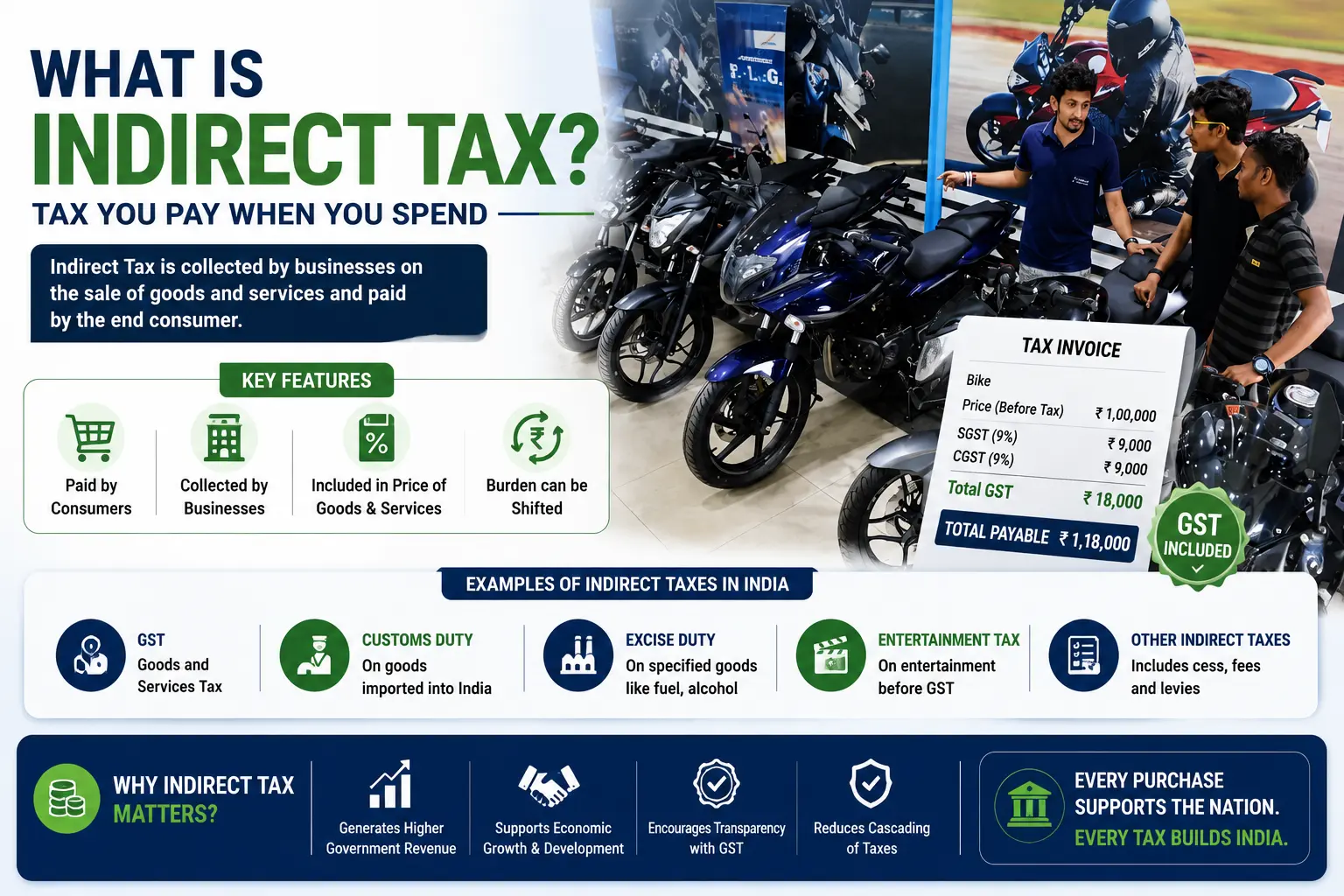
An indirect tax is a tax collected by one entity but ultimately paid by another person, usually the end consumer. Unlike direct taxes, the burden of indirect tax can be shifted from one person to another through pricing. For example, when consumers purchase goods or services, they pay GST as part of the final product price. Businesses collect this tax and deposit it with the government. Indirect taxes in India are mainly administered through GST laws, customs laws, and related taxation systems under the supervision of the Central Board of Indirect Taxes and Customs (CBIC). Some common examples of indirect taxes include GST, Customs Duty, Excise Duty, and Entertainment Tax before GST implementation. Indirect taxes form a major part of everyday consumer spending.
Difference Between Direct and Indirect Tax
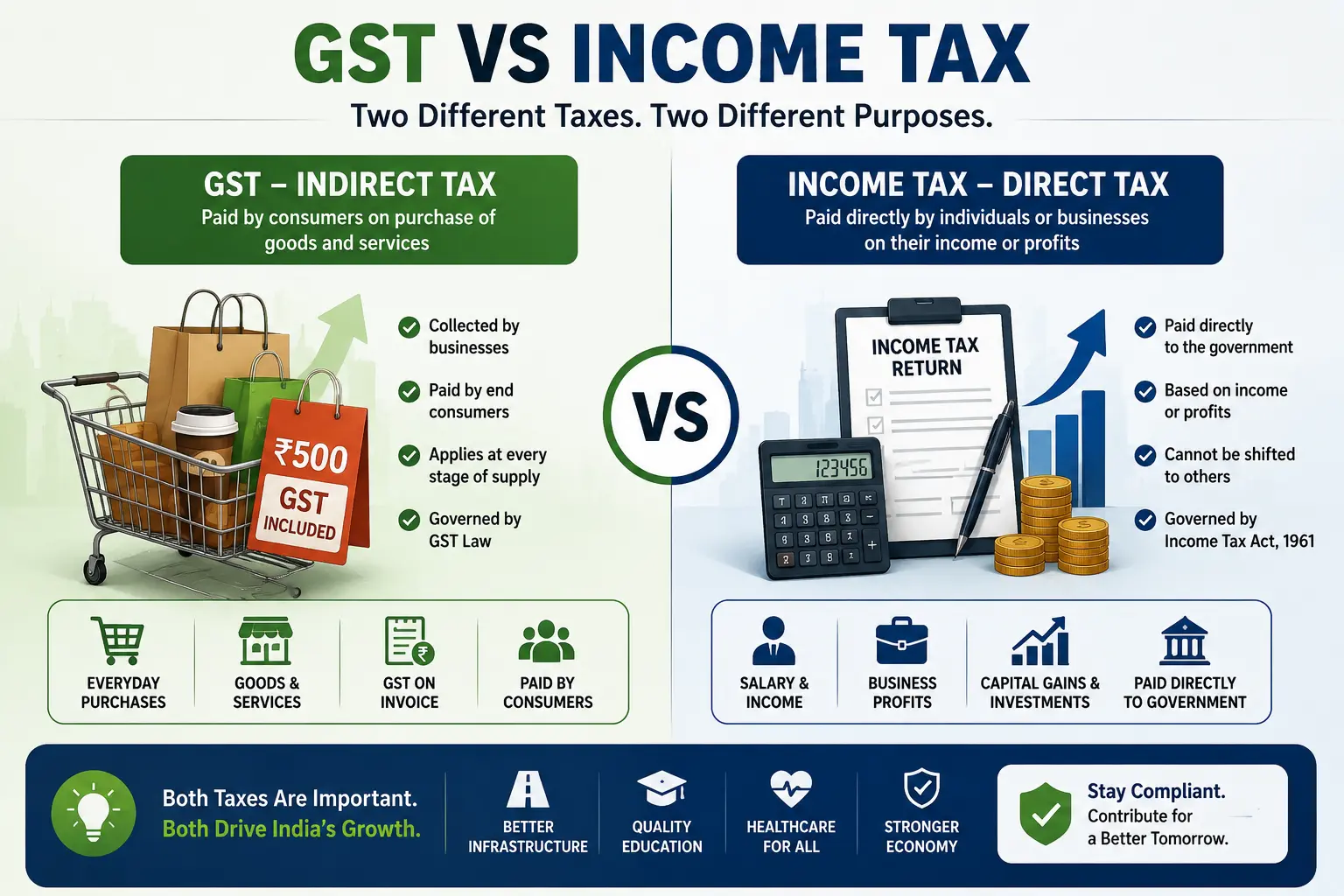
Although both taxes generate government revenue, their structure and impact are completely different.
Basis
Direct Tax
Indirect Tax
Paid By
Taxpayer directly
Consumer indirectly
Tax Burden
Cannot be shifted
Can be shifted
Governed By
Income Tax Act, 1961
GST & indirect tax laws
Example
Income Tax
GST
Impact
Based on income
Based on spending
Collected By
CBDT
CBIC
Direct taxes focus more on a taxpayer’s earning capacity, while indirect taxes apply during consumption of goods and services.
Direct Tax Examples in India
The Indian taxation system includes several forms of direct taxes. Income tax is the most common direct tax paid by salaried employees, professionals, freelancers, and businesses. Tax liability depends on income slabs and applicable deductions. Corporate tax is another major direct tax imposed on company profits. Businesses operating in India are required to pay taxes based on their taxable income and applicable corporate tax rates. Capital gains tax applies when taxpayers earn profits from the sale of assets such as property, stocks, or mutual funds. Securities Transaction Tax (STT) is charged on transactions involving securities traded on stock exchanges. These taxes directly impact taxpayers based on their income or financial gains.
Indirect Tax Examples in India
Indirect taxes are deeply integrated into everyday transactions and business operations. GST is currently the largest indirect tax system in India. It replaced multiple older taxes such as VAT, service tax, and excise duty. Whenever consumers buy products, dine at restaurants, book hotel stays, or subscribe to online services, GST becomes part of the final invoice. Customs duty is imposed on imported goods entering India. This tax helps regulate imports and protect domestic industries. Excise duty still applies to certain products such as petroleum and alcohol products outside the GST framework. Indirect taxes affect almost every consumer because they are embedded into product and service pricing.
Income Tax Act, 1961 Explained
The Income Tax Act, 1961 is the primary legislation governing direct taxation in India. The Act defines taxable income, tax slabs, deductions, exemptions, filing requirements, penalties, and compliance obligations. It applies to individuals, HUFs, firms, LLPs, companies, and other taxable entities. Over time, the Act has undergone multiple amendments to modernize India’s taxation system and strengthen compliance frameworks. The introduction of AIS, TIS, faceless assessments, and AI-based monitoring systems reflects the government’s shift toward digital tax administration.
GST and the Evolution of Indirect Taxation
Before GST, India’s indirect tax structure was highly fragmented. Businesses had to deal with multiple taxes including VAT, central excise, service tax, octroi, and entry tax. The implementation of Goods and Services Tax (GST) simplified this structure by introducing a unified taxation system. GST significantly improved tax transparency, interstate trade, input tax credit systems, and compliance standardization. Today, GST remains one of the largest tax reforms in Indian economic history. It also increased digital tax reporting and reduced cascading tax effects across industries.
Advantages of Direct Tax
Direct taxes are considered more equitable because they are linked to a taxpayer’s income and financial capacity. Higher-income individuals generally pay more taxes, which supports progressive taxation principles. Direct taxation also helps the government reduce income inequality, improve revenue predictability, and monitor financial transparency. Additionally, direct taxes provide stronger economic policy control because governments can adjust tax slabs and deductions based on fiscal requirements.
Advantages of Indirect Tax
Indirect taxes are easier to collect because they are integrated into product pricing and business transactions. Since consumers pay taxes while purchasing goods and services, the collection system becomes broader and more efficient. Indirect taxes also contribute significantly to government revenue because almost every consumer participates in the tax system through spending. GST further improved transparency and reduced multiple taxation layers across the supply chain.
Disadvantages of Direct Tax
Despite their importance, direct taxes also have certain limitations. High tax rates may discourage investments or reduce disposable income for some taxpayers. Complex compliance rules can also create filing difficulties for individuals and businesses. In some situations, aggressive tax planning and tax evasion attempts increase administrative challenges for authorities. Direct taxation systems also require extensive reporting, documentation, and monitoring infrastructure
Disadvantages of Indirect Tax
Indirect taxes are often criticized because they affect all consumers equally regardless of income level. Lower-income individuals may end up paying a larger proportion of their income through indirect taxes on essential goods and services. Additionally, indirect taxes may increase inflationary pressure because businesses often transfer tax costs to end consumers through pricing adjustments. Complex GST compliance requirements can also create operational challenges for small businesses.
Direct vs Indirect Tax – Which Is Better?
There is no simple answer to whether direct tax or indirect tax is better because both serve different economic purposes. Direct taxes help ensure income-based fairness and wealth redistribution. Indirect taxes, on the other hand, provide stable and broad-based revenue collection. A balanced taxation structure usually combines both systems to support economic growth, public spending, infrastructure development, and welfare programs. India’s taxation system relies heavily on the combined contribution of direct and indirect taxes for national revenue generation.
How Direct and Indirect Taxes Affect Common Taxpayers
Both taxation systems affect individuals differently. Salaried employees are directly affected through income tax deductions and annual ITR filing obligations. At the same time, they also pay indirect taxes through daily spending on products and services. Businesses face direct taxes on profits while simultaneously managing indirect tax compliance through GST collection and filing systems. Consumers may not always notice indirect taxes separately because they are included within final product pricing. This is why understanding taxation becomes important not only for businesses but also for ordinary taxpayers.
Frequently Asked Questions (FAQs)
What is the difference between direct and indirect tax?
Direct tax is paid directly to the government by the taxpayer, while indirect tax is collected through goods and services and ultimately paid by consumers.
Is GST a direct tax or indirect tax?
GST is an indirect tax because businesses collect it from consumers and deposit it with the government.
Is income tax a direct tax?
Yes. Income tax is a direct tax governed by the Income Tax Act, 1961.
Who collects direct and indirect taxes in India?
Direct taxes are mainly administered by CBDT, while indirect taxes are managed by CBIC.
Why are indirect taxes important?
Indirect taxes provide broad-based government revenue because they are collected through consumer spending and business transactions.
Which tax affects common consumers more?
Indirect taxes affect consumers more frequently because they are included in everyday purchases and services.
Final Thoughts
India’s taxation system is built around the combined framework of direct and indirect taxes. Both systems play a critical role in revenue generation, economic policy, business regulation, and national development. While direct taxes focus on income-based taxation and financial equity, indirect taxes drive large-scale consumption-based revenue collection through GST and related systems. As India moves toward a more digital and AI-driven tax administration structure, understanding how direct and indirect taxes work is becoming increasingly important for businesses, professionals, salaried employees, and investors. A strong understanding of taxation not only improves compliance but also helps taxpayers make better financial and business decisions.
Need Professional Tax Guidance?
Whether you need help with income tax filing, GST compliance, tax planning, or business taxation, AVC’s tax professionals can help you manage both direct and indirect tax compliance accurately and efficiently.